Chelsea’s Mykhailo Mudryk Reportedly Quits Football to Chase Athletics Dream Ahead of 2028 Los Angeles Olympics
 Emmanuel Femi Adedayo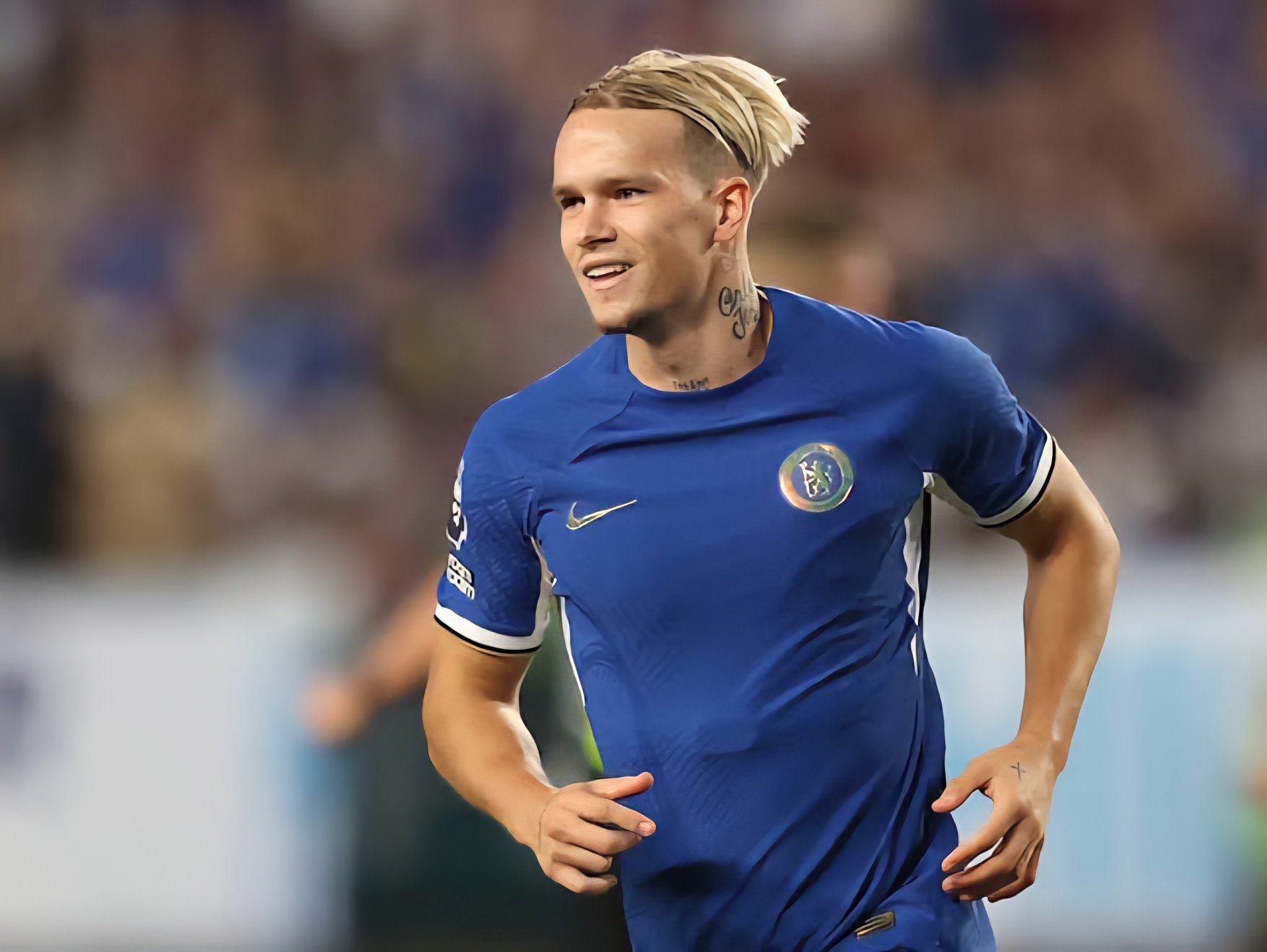
The Ukrainian international midfielder, who plays for an English club, is preparing to earn a place in the sprint team at the LA28, after a provisional suspension following a positive drugs test forced him to reconsider his future.
Mykhailo Mudryk is capable of running at 36.67 km/h. His impressive physique may help him to achieve his goal, after his life took a dramatic turn at the age of 25. He came through the ranks at Shakhtar Donetsk before making the leap to the Premier League with Chelsea, who paid €70 million for him in 2023. However, on 18 June this year, the Football Association confirmed a positive test from the previous season, as reported by the British newspaper The Mirror, and the Ukrainian winger was provisionally suspended. The test revealed traces of meldonium, a prohibited performance-enhancing substance.
Since then, questions have been raised about Mudryk’s reputation, and while FIFA considers the sanction he may face, the Ukrainian has chosen not to waste time. He is training with his country’s Olympic sprint team as he seeks to meet the demanding requirements to earn a place representing Ukraine at the 2028 Los Angeles Olympics. First, he must pass the domestic selection process in 2027, a year before the Games, and then meet the qualifying standards set by World Athletics.
Despite the ongoing sanction, Mudryk was included in Chelsea’s official squad list for the 2025/26 Premier League season. The coaches working with the midfielder, who is still registered with the club, acknowledge his potential and explosiveness. While he has only just embarked on the unusual journey of switching from football to athletics, some believe he has a chance of securing an Olympic spot.
Following the investigation, the Ukrainian received formal charges, after which Chelsea issued an official club statement, “We can confirm that Mykhailo Mudryk has been charged with anti-doping rule violations, alleging the presence and/or use of a prohibited substance under regulations 3 and 4 of the FA’s anti-doping regulations. As this is an ongoing case, we are not in a position to comment further at this time.”
Before a Club World Cup fixture, his manager, Chelsea head coach Enzo Maresca — a former Sevilla player who recently won the UEFA Conference League with the English club — shared his view , “I spoke with Mischa in Poland when we played the Conference League final. I haven’t spoken with him since. I didn’t see the news, but I was informed of it. There’s nothing more I can add because I don’t have any more information. Mischa is a Chelsea player. Until he is no longer one, I will trust him. And that goes for all the players,” said Maresca.
Mudryk has always maintained that he was surprised by the anti-doping result, which has now put him under pressure, and he insists that he never knowingly took a prohibited substance. Since joining the Premier League in 2023, his performances have been inconsistent, alternating between moments of brilliance and periods of disengagement. He has always stood out for his speed, which enables him to outpace defenders physically.
The maximum sanction for such an offence is up to four years, unless he can prove that the consumption was accidental or unintentional. However, if he can demonstrate that there was no deliberate attempt to enhance his performance, the punishment could be reduced. There are precedents: Samir Nasri received an 18-month ban for a medical violation, while goalkeeper André Onana was suspended for a year for accidental doping. He returned to play and is now Manchester United’s first-choice keeper. In such a scenario, Mudryk could return to football in 2026/27, aged 25 or 26.
However, if he fails to prove a lack of intent, he could be sidelined until 2028–2029. At that age (27–28), regaining an elite level would be extremely difficult. Chelsea would probably terminate his current contract, which ties him to the club until 2031.
About the Author

 Ayo Marvel



 Ademola Busayo