Ademola Busayo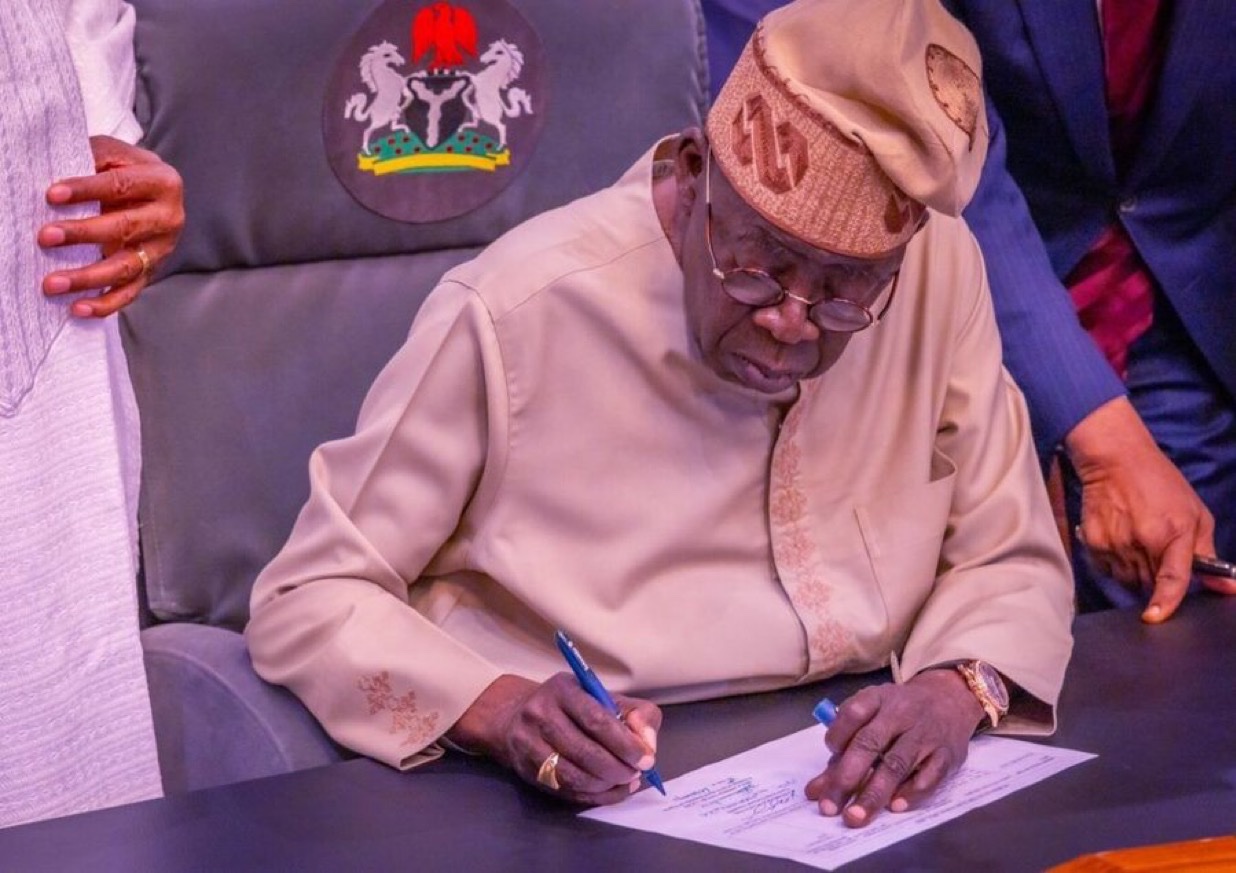
President Bola Ahmed Tinubu has signed the Electoral Act, 2022 (Repeal and Re-Enactment) Bill 2026 into law.
This follows the passage of the bill by the National Assembly on Tuesday after months of deliberations.
We reports that the House of Representatives on Tuesday, during the emergency plenary, passed the Electoral Act (Amendment) bill, 2026, through Third Reading, with approval of both manual and electronic transmission of election results from each polling unit to the IREV portal, as prescribed in Form EC8A.
Despite the walkout protest staged by members of the Opposition lawmakers Caucus led by the Minority Leader, Rep. Kingsley Chinda, the House adopted Clause 60 on ‘Counting of votes and forms’, during the Committee of the Whole, chaired by the Deputy Speaker, Hon. Benjamin Kalu.
Also, another attempt at making electronic transmission of election results mandatory failed again at the Senate on Tuesday.
The Electoral Bill 2026, as passed on Tuesday, retained electronic transmission of results with the proviso that where technology malfunctions, the presiding officer can resort to manual collation of results through Form EC8A.
The majority of senators, largely of the All Progressives Congress (APC), insisted that manual collation of results remain the most assured mode of determining the outcome of polls.
To arrive at the decision, there was a division of the Senate, with 55 lawmakers supporting electronic transmission of results with an option using the manual method where technology fails, while senators who opposed the proviso, mainly from minority political parties, were only 15 in number.
More to follow…
About the Author



 Emmanuel Femi Adedayo
 admin
admin 
 Ayo Marvel