ASUU Confirms Plans to Embark on Strike, Sends Message to Students and Parents
 Ademola Busayo
The Federal Government and the Academic Staff Union of Universities (ASUU) will meet today in an attempt to douse tension brewing in public universities over unmet demands.
Information from the Federal Ministry of Education indicated that the Minister of Education will chair the meeting scheduled to hold at the Minister’s conference room, Federal Ministry of Education, Abuja, at about 11:30 am.
He will be joined by the Minister of Labour, representatives of the National Salaries, Incomes and Wages Commission (NSIWC) and the Solicitor General to meet ASUU leaders to examine how to finally implement the renegotiated 2009 FGN–ASUU agreement and related reports produced in the most recent round of negotiations.
At the high-stakes meeting, government is expected to make a counter offer in a bid to translate years of stalled renegotiations into concrete, implementable commitments with the university teachers. Therefore, the meeting will be tasked with delivering a clear timetable for signature and phased implementation, according to officials.
The move comes amid warnings from ASUU branches nationwide that their patience is exhausted after a renegotiation process concluded in December 2024 and formally submitted to government in February 2025.
The engagement has been described as a reflection of government’s commitment to constructive dialogue and collaboration in addressing key issues in Nigeria’s university system.
But ASUU President, Prof. Chris Piwuna, has said the union will not be part of the meeting because it was not invited. “It’s not our meeting. It’s possible that the meeting is between the Ministry officials and Yayale Ahmed renegotiation committee. So, at the union level, we are not aware of the meeting.”
A top official of ASUU, however, told Daily Sun that invitation for the meeting was received before the various branches began the protest rallies and congress endorsement of strike.
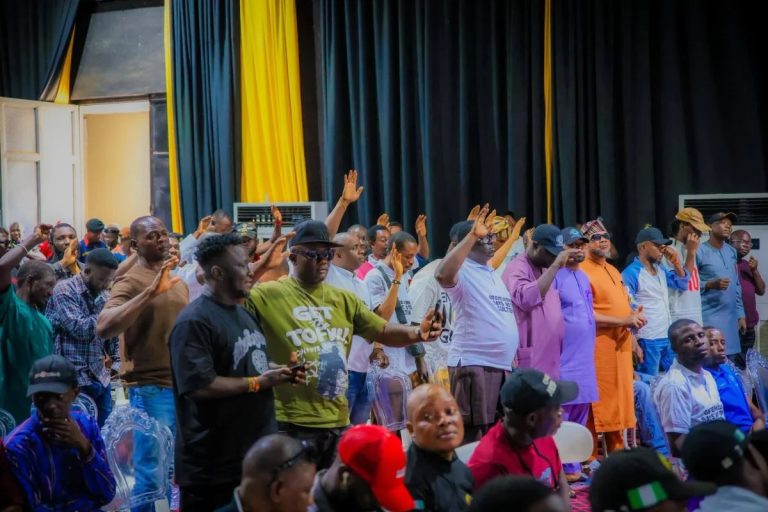
ASUU began peaceful protests across campuses nationwide on Tuesday to register its discontent with the “insensitivity” of the government to the plight of the university lecturer.
As requested by the union at its meeting in Jos, its members were mobilised en masse to participate in the rally across the campuses. ASUU this will be the first shot and it will signal many other things to come and reassure members that it is committed to addressing the challenges ahead.
The issues include the re-negotiation of the 2009 ASUU-FG Agreement; sustainable funding of our universities; revitalisation of universities; victimization of our colleges in LASU, KSU (now Prince Abubakar Audu University) and FUTO.”
The union have asked Nigerians to note that it had tried several ways and strategies of resolving the conflict in the education sector, and should also note that it has written several letters to the federal government drawing its attention to the need to resolve the crisis amicably.
“Sadly, the Federal Government has always turned a deaf ear to all our pleas. As always, it is the federal government that consistently pushed our union to embark on a strike action, and it is clear that ASUU may have no other option than to embark on an action to press the government to listen to our demands and do the needful,” it said.
ASUU leaders have insisted that the draft must now be signed and implemented to avert another nationwide shutdown of public universities.
During Monday and Tuesday congresses, ASUU explained that the crucial meeting will determine the next phase of the struggle. “Our position is clear. Once Thursday’s (today) meeting does not produce a positive result, the union will certainly take appropriate action and to meet the expectations of our members who are agitated.
“We cannot continue to tell our members stories. They will expect a positive outcome and if not, the congresses have taken a position on what is expected to happen. The renegotiation of 2009 and signed agreement, IPPIS issue, sacked members and payment of the three and half months salaries are crucial for our members,” said the NAC members.
According to him, the outcome of the various congresses and the resolutions reached are a pointer to members resolute to tell the Federal Government that enough is enough.
Last week, Prof. Piwuna, noted that the issues in contention include re-negotiation of the 2009 ASUU-FGN agreement, sustainable funding of public universities, and revitalization of universities.
He listed other demands, which are victimisation of colleges in LASU, KSU (now Prince Abubakar Audu University) and FUTO, outstanding 25-35 percent salary areas, promotion Arrears for over four years and third party deductions.
He disclosed that the government made promises on these issues and regrettably, these undisputed issues that could result in a crisis in the education sector have not been met.
Piwuna noted that ASUU-NEC appreciates the patience and forbearance of its membership since the last referendum and warned that the government cannot keep the union talking forever.
He added: “The general public is invited to note that ASUU has tried several ways and strategies of resolving the conflict in the education sector. The general public should also note that ASUU has written several letters to the Federal Government drawing its attention to the need to resolve this crisis amicably. Lamentably, the Federal Government has always turned a deaf ear to all our pleas.
“As always, it is the Federal Government that has consistently pushed our union to embark on a strike action, and it is clear that ASUU may have no other option than to embark on an action to press the government to listen to our demands and do the needful.”
At a press conference in Abuja, the Zonal Coordinator of ASUU Abuja Zone, Prof. Al-Amin Abdullahi, stressed that the union had kept its part of the bargain and expected the government to demonstrate seriousness by adopting the report without delay.
The 2009 agreement remains the touchstone of the dispute, signed under the late President Umaru Musa Yar’Adua, which promised comprehensive reforms to Nigeria’s public universities, including sustained revitalisation funding, institutional autonomy, a negotiated salary and conditions package for academics, and a monitoring framework for implementation. Its partial or non-implementation across successive administrations has led to recurring strikes.
Analysts estimate that, since 1999, cumulative industrial action by ASUU and other unions has cost the system the equivalent of nearly five years of lost academic time, a disruption that has corroded confidence in the country’s higher education sector.
But stakeholders and government insiders argue that what differentiates the current process is the approach of Alausa, who has combined immediate remedial action with longer-term structural reforms.
Earlier this year, the Tinubu administration released N50 billion to settle earned academic allowances (EAA) owed to university lecturers and staff, a debt that had festered for almost two decades and repeatedly fuelled strike actions.
The move, credited directly to Alausa’s intervention, was received across campuses as a restoration of trust and a demonstration that government could finally match promises with delivery.
Beyond arrears, Alausa has also launched the Diaspora BRIDGE Initiative, a digital platform designed to connect Nigerian professionals abroad with universities at home through mentorship, guest lectures, research collaboration, and curriculum support.
The union therefore called on Nigerians and the global community to impress on the government to attend to those issues before it is too late.
Also speaking, immediate past Zonal Coordinator, Ralph Amokaha said ASUU rejects the government loans arguing why it would be owing and instead of paying, the same government is offering them loans. “Government feeds the people with propaganda and makes us look like trouble makers. Most of the so-called interventions are deceptive and we reject them.”
About the Author


 Emmanuel Femi Adedayo
 Ayo Marvel