Ebola Virus: Federal Government Reassures Nigerians Amid Surveillance Efforts and N10Billion Funding Concerns
 Ademola Busayo
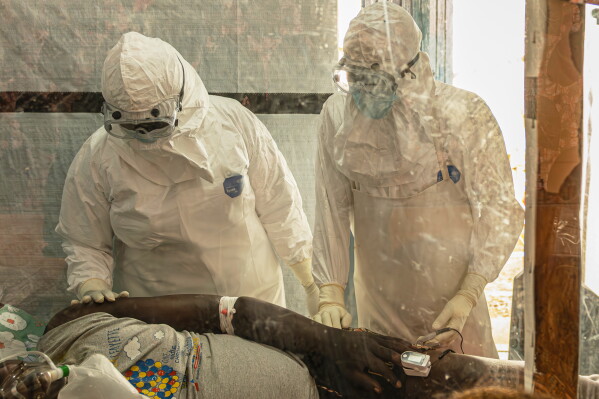
The Federal Government has moved to allay fears over Nigeria’s latest Ebola case, assuring citizens of effective containment measures, but questions over airport surveillance, possible gaps in contact tracing and the whereabouts of the N10 billion reportedly earmarked for preparedness have raised concerns about the country’s response.
It followed the confirmation of the infection in a woman who travelled to Abuja through Addis Ababa on October 5, 2026.
The woman reportedly developed symptoms two days after arriving in Nigeria and sought treatment at a private hospital in Abuja on October 11, presenting with malaria-like symptoms. Her condition reportedly failed to improve.
Health officials subsequently established that she had recently travelled to Uganda, which is affected by the current outbreak. She was tested for Ebola on October 19, with the positive result confirmed on Tuesday.
Nigerian health authorities have since identified 44 contacts linked to the case, most of them healthcare workers. The contacts also include the patient’s husband, a Swiss national residing with her in Abuja.
The government said it had intensified contact tracing and containment measures, ruling out an immediate blanket quarantine of Nigerians.
Minister of Health and Social Welfare, Prof Muhammad Ali Pate, said the government was working closely with Uganda and other relevant health authorities to prevent further transmission, expressing confidence in Nigeria’s public health infrastructure and expertise.
Pate spoke yesterday night after a closed-door meeting with the Chief of Staff to the President, Femi Gbajabiamila, at the Presidential Villa, Abuja.
He disclosed that the Nigeria Centre for Disease Control and Prevention (NCDC) had activated its incident management system, with health officials working round the clock to trace contacts, monitor potential exposure and implement containment measures.
The Chief of Staff to the President has confirmed that the woman is currently responding well to treatment.
The minister urged Nigerians to remain vigilant, observe public health precautions and rely on verified information from official sources rather than spreading rumours or unconfirmed reports.
“We are collaborating with our sister African nation of Uganda. What is important is that we have found this one case. We are doing contact tracing, and we are putting containment measures in place to ensure that it does not spread into our population,” he said.
Pate recalled Nigeria’s successful response to the 2014 Ebola outbreak, expressing confidence that the country’s public health institutions could effectively manage the current situation.
“Nigerians should be reassured. We must be vigilant, but not panic,” he said.
He added that the government would continue to provide regular updates as more information became available, warning against what he described as unnecessary hysteria over the confirmed case.
“We have things in place that give us confidence that Nigeria can weather this public health crisis. Let us not fall into a trap of hysteria or panic. It is one case; it is an imported case, and we are containing it.
“We will continue to take measures. If the situation changes, we will come out and inform Nigerians,” the minister said.
About the Author


 Ayo Marvel