Senate Approves President Tinubu’s Request to Borrow Over $21 Billion for 2025–2026 Budget Plans
 Ademola Busayo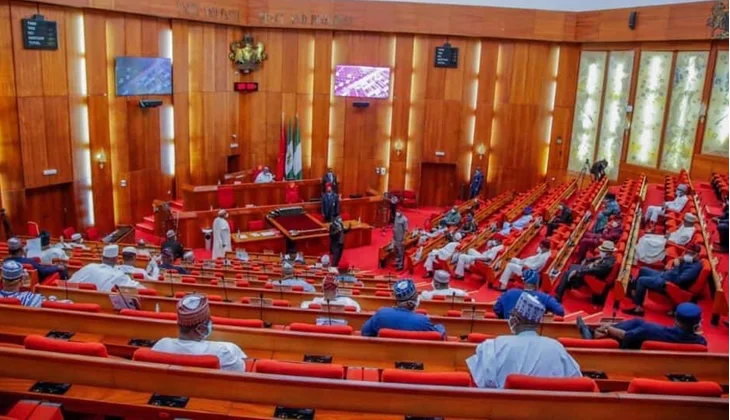
The Nigerian Senate on Tuesday approved President Tinubu’s external borrowing plan of $21.5 billion for the 2025–2026 period, paving the way for funding key national development projects.
The approval followed the presentation of a report by the Chairman of the Senate Committee on Local and Foreign Debts, Senator Aliyu Wamakko (APC-Sokoto), at plenary.
President Tinubu had asked the National Assembly to endorse the borrowing to finance critical sectors including infrastructure, security, education, health, agriculture, and human capital development.
Also approved were a ¥15 billion Japanese loan, a €65 million grant, and additional domestic borrowing of ₦757 billion through federal bonds to offset pension arrears as of December 2023.
The Senate further gave the nod to the President’s request to raise up to $2 billion through foreign-currency denominated instruments in the domestic market.
Senator Wamakko said the loan request aligns with the already approved Medium Term Expenditure Framework (MTEF) and Fiscal Strategy Paper (FSP) for the 2025 budget cycle.
“The committee recommends approval, as the borrowing plan is within the framework passed by the National Assembly,” Senator Wamakko said.
Backing the motion, Senator Solomon Adeola (APC-Ogun) noted that the loans were embedded in the 2025 Appropriation Act, adding, “With this approval, all revenue sources, including loans, are now in place to fund the budget.”
Senator Sani Musa (APC-Niger) stressed that the loans would be disbursed over six years and assured that Nigeria had not defaulted on its debt obligations.
“No economy grows without borrowing. This follows global best practices,” Senator Musa said.
Senator Adetokunbo Abiru (APC-Lagos) said the facilities complied with the Fiscal Responsibility Act and the Debt Management Act, explaining, “These are long-term, concessional loans with favourable terms, some spanning up to 35 years.”
However, Senator Abdul Ningi (PDP-Bauchi) raised concerns over the absence of repayment details and how the loans would directly impact constituents.
“We must tell Nigerians exactly how much is borrowed in their name and for what purpose,” Ningi said.
Senator Victor Umeh (LP-Anambra) threw his weight behind the plan, commending the $3 billion earmarked for the eastern rail corridor.
“For the first time, I’ve seen such allocation for the eastern rail line—this alone justifies my support,” Umeh said.
Deputy Senate President Jibrin Barau (APC-Kano), who presided over the session, praised the committee’s work and assured that the plan reflects national inclusiveness.
“With this approval, implementation of the 2025 budget can begin in full. The funds must be strictly used for capital and development projects,” Barau said.
About the Author


 Emmanuel Femi Adedayo
 Ayo Marvel