Nigeria in Economic Decline as Investors Withdraw Amid Debt Crisis — Afe Babalola Faults Tinubu’s Leadership
 Ademola Busayo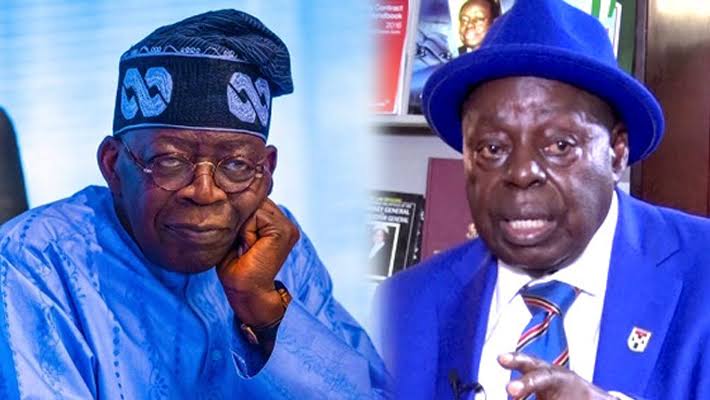
Nigeria is heading towards an economic breakdown as foreign investors withdraw their interest from the country due to its rising debt profile and inability to meet financial obligations, legal icon Afe Babalola has warned, blaming Bola Tinubu’s administration for deepening fiscal instability and eroding investor confidence.
Babalola said Nigeria is now seen globally as a debtor nation, with most international businesses reluctant to invest due to its inability to meet financial obligations.
He raised concerns that even local banks are complaining that the Central Bank of Nigeria is unable to honour government promissory notes because the federal government is indebted to it.
“The record shows that Nigeria, as of today, is a big debtor country,” Babalola said.
He disclosed that Nigeria’s total public debt has climbed to ₦152.4 trillion, adding that this financial burden is fuelling economic distrust at home and abroad.
“Consequently, most business companies from other countries do not want to invest in this debtor country,” he said.
According to him, banking institutions have lost confidence because the CBN is failing to redeem promissory notes issued by the government.
He warned that a nation whose central bank cannot meet its financial guarantees risks a total collapse of investor confidence and financial stability.
Babalola reminded the government that the Nigerian Constitution declares the security and welfare of citizens as its primary responsibility.
“The security and welfare of the people shall be the primary purpose of government,” he noted.
He called for urgent fiscal reforms, responsible borrowing and leadership that prioritises national interest over political gain.
The legal scholar spoke at a conference in Ado-Ekiti with the theme “Shaping Transformational Leaders for a Changing World: Tackling Insecurity, Governance and Development”.
Development expert Otive Igbuzor, in his lecture, said poor governance, corruption and weak institutions are worsening unemployment, inequality and public debt across Africa.
He argued that Nigeria needs transformational leaders who reward merit and innovation rather than patronage and personal loyalty.
Vice Chancellor of Afe Babalola University, Smaranda Olarinde, said the conference was timely as Nigerians continue to battle insecurity, poverty, hunger and economic uncertainty.
About the Author


 Emmanuel Femi Adedayo
 Ayo Marvel