“I’ll End Frequent Grid Collapses Within Three Months” — New Power Minister and Ibadan-Born Tegbe Says
 Ayo Marvel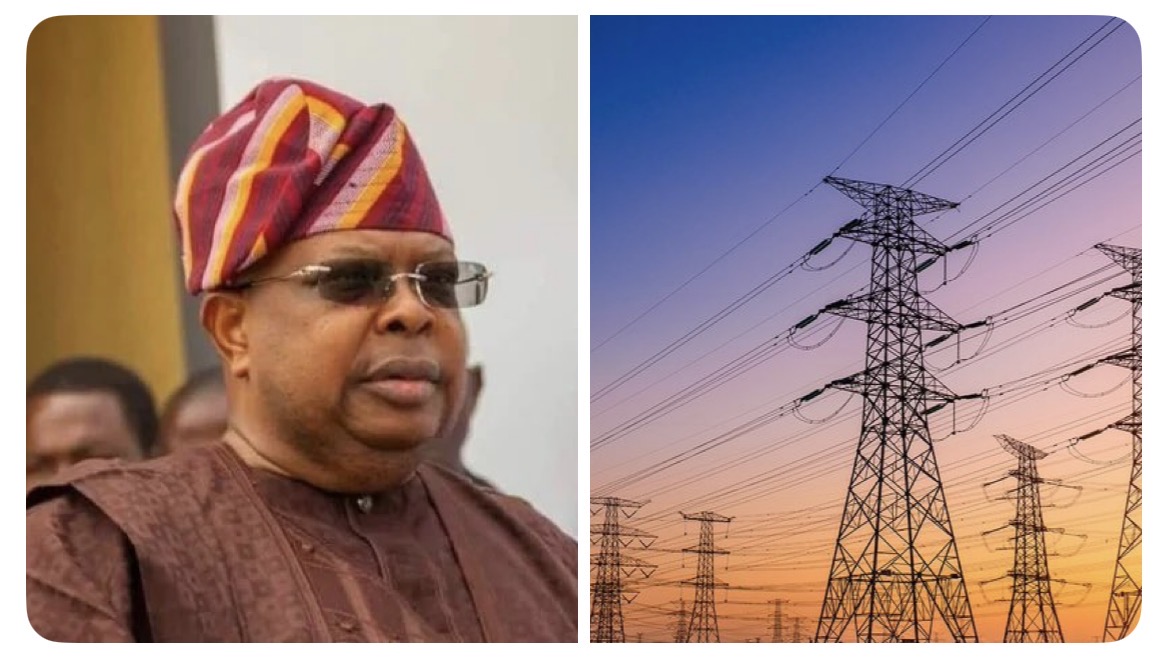
Screenshot
Ministerial nominee for Power, Joseph Tegbe, on Wednesday stunned lawmakers with a firm commitment to stabilise Nigeria’s fragile electricity grid within his first 100 days in office if confirmed, setting the tone for what may become one of the most pressured reform agendas in the administration.
“If you don’t see this in three months, it means you won’t see it in six months. You must see results in the first 100 days, and you must hold us accountable,” Tegbe told the Senate during his screening.
His pledge immediately reframed the session from routine confirmation to a high-stakes accountability exchange, as senators pressed him on whether Nigeria’s long-standing power crisis can realistically be reversed within such a short timeline.
Tegbe said his immediate focus would be stabilisation of the national grid, enforcement of discipline across the electricity value chain, and aggressive reduction of systemic leakages that have crippled sector performance for years.
“The first phase in the 100 days is to stabilise the grid… we need to enforce strict codes against indiscipline and ensure a disciplined system across the sector,” he said.
He also stressed that the power sector cannot be reformed without addressing structural inefficiencies, governance gaps, and financial stress that have accumulated over decades.
According to him, Nigeria’s electricity industry is weighed down by an estimated ₦6 trillion debt burden, a situation he said has constrained investments and weakened operational stability.
“Government has done very well… we even settled ₦3.3 trillion through bonds, but the sector is still under pressure,” he said.
However, it was the Senate’s intervention that defined the tone of the screening, as lawmakers urged Tegbe to confront what they described as entrenched interests benefiting from Nigeria’s chronic darkness.
Chairman of the Senate Committee on Power, Senator Enyinnaya Abaribe, warned that a powerful ecosystem had developed around electricity failure, particularly the booming generator import and sales market.
“There is a cabal you must confront, both within the system and outside it. Those importing generators are thriving because power is not stable,” Abaribe said.
He argued that Nigeria’s dependence on self-generation has created a parallel energy economy that now indirectly competes with national grid reform efforts, warning that such interests may resist any serious attempt at stabilisation.
Lawmakers described the generator market as a “failure-driven economy,” sustained by persistent grid collapse and weak supply reliability across residential, commercial, and institutional users.
Former Minister of Power, Senator Danjuma Goje, reinforced the concerns with a blunt assessment of the sector’s internal dynamics, warning that inefficiency has become financially rewarding for some operators.
“When power goes out, some people see opportunity, not crisis,” Goje said.
“You must not allow a situation where inefficiency becomes a business model.”
Goje alleged that repeated system failures often trigger cycles of emergency maintenance contracts, overtime payments, and technical interventions that benefit entrenched actors within the sector.
He cautioned Tegbe to carefully scrutinise all maintenance-related expenditures, warning that inflated figures and questionable procurement processes often worsen the very problems they are meant to solve.
“Be careful with maintenance figures coming to you. Some of them are not genuine. If you don’t check it, you will be sustaining the problem you are meant to solve,” he said.
Beyond financial and governance concerns, lawmakers also highlighted technical constraints that continue to undermine power supply stability.
They noted that Nigeria’s generation capacity, estimated at about 7,500 megawatts, is significantly higher than what the system can actually deliver to end users due to bottlenecks in transmission and distribution.
The transmission network, they said, struggles to wheel more than 4,500 megawatts without risking system collapse, while distribution companies continue to suffer from weak infrastructure, energy losses, and poor metering penetration.
“Even when power is generated, it is not efficiently transmitted, and when it gets to distribution, it is not properly delivered to Nigerians,” Goje said.
Lawmakers warned that without coordinated reform across the entire value chain, improvements in one segment would not translate into stable electricity supply.
Tegbe also drew attention to external pressures affecting the sector, particularly vandalism of transmission infrastructure, which he described as a national security concern requiring stronger collaboration with security agencies.
He further acknowledged that liquidity challenges remain one of the most critical barriers to sector performance, with debts affecting generation companies’ ability to pay for gas and sustain operations.
“We Will End Leakages and Disrupt Entrenched Interests”
In a more forceful tone, Tegbe warned that certain actors within the system benefit from recurring failures and would need to be confronted directly.
“When there is power failure, some engineers are relaxed because they know more jobs are coming,” he said.
“We are going to put a stop to leakages and challenges in the power sector.”
He pledged to introduce tighter monitoring systems, improve operational discipline, and strengthen collaboration across stakeholders in generation, transmission, and distribution.
Senate President Godswill Akpabio added that Nigeria’s power challenges cannot be solved by engineering reforms alone, pointing instead to institutional overlaps and regulatory inconsistencies involving sector agencies.
Lawmakers agreed that Nigeria’s electricity crisis is sustained by a combination of technical limitations, governance failures, and vested economic interests that benefit from instability.
“Those importing generators do not want stable power because instability benefits them,” a senator observed.
Confirmation and Final Charge
At the end of the screening, the Senate confirmed Joseph Tegbe through a voice vote, after which he was asked to “take a bow and go,” in line with legislative tradition for nominees with strong credentials.
However, lawmakers made it clear that endorsement came with expectations.
The new minister is now tasked with confronting entrenched interests in the power sector, stabilising the national grid within 100 days, addressing Nigeria’s multi-trillion-naira sector debt, and restoring confidence in a system long defined by instability.
For a sector often described as Nigeria’s most persistent development bottleneck, Tegbe’s 100-day promise sets up an early test of ambition versus entrenched reality.
About the Author


 Emmanuel Femi Adedayo
 Ademola Busayo