My Take and Honest Review on Efunroye the Unicorn: A Compelling Story of Power, Love and Legacy by Ayo Marvel
 Ayo Marvel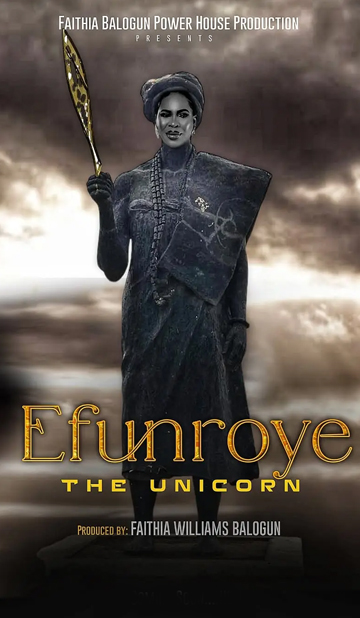
After watching Efunroye the Unicorn, produced by renowned actress and filmmaker Fathia Balogun Williams, I can confidently say it is a captivating portrayal of the true-life story of one of the most powerful women in Yoruba history.
Efunporoye Osuntinubu Olumosa (often shortened to Efunroye Tinubu) was a shrewd and ambitious Nigerian business tycoon who wielded enormous economic power across Western Africa and political power in Abeokuta and Lagos. She was born around 1805 in the Yoruba town of Abeokuta in Western Nigeria. She married a man and had two sons with him, but he died soon thereafter.
The movie tells the story of Madam Efunroye Tinubu, the iyalode of Egbaland, a powerful queen, influential business tycoon and iconic figure whose legacy remains significant in Nigerian history. The production featured an impressive cast of talented actors and actresses who brought the story to life brilliantly.
Efunroye then moved to Lagos after Adele returned to his throne in 1835. Unfortunately, Adele died just two years later in 1837, making Tinubu a widow for the second time. She helped install Adele’s son, Oluwole, as the new king and married his military advisor, Yesefu Bada. She also continued to expand her trade network by monopolizing slaves and palm oil, and offering firearms obtained from the Europeans, which increased her wealth during the Yoruba Wars of the 1840s and 1850s.
After the accidental death of Oluwole, Tinubu arranged for her brother-in-law, Akintoye, to take the throne in Lagos. He in turn rewarded her with ownership of valuable stores in downtown Lagos. She made other investments in Lagos’s business district and built a huge personal residence to reflect her new status. Tinubu was also rumored to own three hundred sixty personal slaves.
Efunroye fell from power in Lagos when she challenged British Consul Benjamin Campbell who railed against her economic hegemony and secret slave trading with Europeans and Brazilians. Efunroye in turn publicly castigated Campbell for his infringement on royal authority and sovereignty in Lagos. She organized a plot to remove Consul Campbell but before it could be implemented, Campbell confronted her with British gunboats in May of 1856 and demanded her exile from Lagos.
Fathia Balogun Williams delivered an outstanding performance in her role, portraying the character with grace, authority, confidence and elegance. Her interpretation added depth and authenticity to the story, making it both engaging and believable.
One of the major lessons from the movie is the importance of being careful with power and the lengths people go to acquire it. It reminds us to always think about the future consequences of our actions. The film also highlights that when helping or supporting others, one should be prepared for criticism and opposition, as good intentions are not always appreciated by everyone.
The story explores themes of power, wealth, influence, trade, slavery, leadership and the human desire for love and acceptance. It presents a balanced view of a remarkable woman whose achievements and controversies shaped her legacy.
In the face of superior British military power, Efunroye was forced back to Abeokuta. She nonetheless remained a major trader in the interior of Nigeria until her death in 1887.
What impressed me most was the attention to historical detail of Eko as its remains Yoruba-land. Based on available historical accounts, the filmmakers did an excellent job of staying true to the story and preserving the essence of Madam Efunroye Tinubu’s life.
I commend the cast, crew, producers, and everyone involved in bringing this remarkable story to the screen. I thoroughly enjoyed watching the movie,m and I appreciate the effort invested in telling such an important part of our history.
I highly recommend this film to anyone interested in learning more about the true-life story of Madam Efunroye Tinubu and the impact she had on society.
My Rating: 7/10
About the Author


 Emmanuel Femi Adedayo

 Ademola Busayo